Week
of October 31, 2004
Making
a Tasty Vegetable Stock
A
good vegetable stock is a good low fat base for
many soups and dishes. It can also be used as
a substitute for chicken stock. To make 4 cups
of vegetable stock, you will need:
2
large onions
2 medium carrots
3 stalks of celery, remove and discard leaves
1 bulb of garlic, cloves separated and peeled
10 black peppercorns
1 bay leaf
Chop
vegetables into large chunks. Peel the garlic
cloves, but it is not necessary to chop the garlic.
Combine all ingredients in a large stockpot and
cover all of the vegetables with water.
You
may use peppercorns and a bay leaf or add other
herbs for seasoning. Common additions are stems
from herbs like parsley, thyme, or rosemary. If
you are planning on using this stock in an Asian
recipe, you may want to add fresh, ginger or lemongrass.
Bring
the stock to a simmer. Once the water has begun
to boil, turn the stove down to low. Allow the
vegetables to simmer for an hour.
Strain
the stock through a fine mesh. The stock will
be sweet, light in color and clear.
Week
of October 24, 2004
Basting
for Added Flavor - Not Fat
Basting
poultry and meats while roasting or grilling is
a great way to add flavor without fat to meat
dishes. You may use it along with spice and herb
rubs or baste just by itself. Basting sauces are
brushed onto meat while it is cooking. If the
sauce is tomato based or contains sugar it is
best to baste just during the last 10 to 20 minutes
of cooking to keep from over-browning.
Here
is one of my favorite basting sauces: In small
saucepan, mix together ¼ cup soy sauce,
2 tablespoons prepared mustard, 2 tablespoons
brown sugar and 2 tablespoons vinegar; bring to
boil. I particularly like this on chicken.
Of
course many combinations of fruit juices, honey,
mustards, soy sauce, wine, vinegar, marmalades,
jelly and spices may be combined to get the flavor
you desire. Let your imagination and your taste
buds be your guide.
Week
of October 17, 2004
Tasty little beans are good for you and they are
easy on your pocketbook too. In fact, beans are
one of the most inexpensive sources of protein
that you can find. Beans cost one-third to one-half
that price of hamburger meat. Beans are available
frozen, canned or dry for ease of preparation
and storage.
Beans
have lot of vitamins and minerals such as B vitamins
including folic acid and iron.They are also low
in fat and calories and contain fiber to help
with digestion. Beans are so nutritious and so
rich in protein that they are included in both
the vegetable and the protein groups in the USDA's
new Food Guide Pyramid.
A
plant protein, beans are called incomplete proteins
because they are missing some of the amino acid
building blocks needed by the human body. It is
very easy, however, to add food grains to a meal
containing incomplete proteins to make them just
as nutritious as animal proteins. Baked beans
and whole wheat bread, refried beans and tortillas
or just beans and rice will all make up a complete
protein. By combining foods from two or more of
the following columns below, you create a complete
protein. The foods in one column may be missing
amino acids that are present in the foods listed
in another column. When eaten in combination at
the same meal or even separately throughout the
day, your body receives all nine essential amino
acids.
You
can combine the following vegetable proteins to
make complete proteins.
Sources
of Complementary Proteins
| Grains |
Legumes |
Nuts/Seeds |
| Barley |
Beans |
Cashews |
| Buckwheat |
Chick
Peas |
Pumpkin
Seeds |
| Bulgur |
Dried
Peas |
Sesame
Seeds |
| Cornmeal |
Lentils |
Sunflower
Seeds |
| Oats |
Peanuts |
Walnuts |
| Pasta |
Soy
Products |
Other
Nuts |
| Rice |
. |
. |
| Rye |
. |
. |
| Wheat |
. |
. |
Beans
offer tremendous variety and versatility. Working
with dried beans takes a little forethought, since
it is best to soak the beans overnight or during
the day when at work. Remember if you use canned
beans in your recipes that you will need to use
salt free canned products or adjust spices and
salt in your recipe accordingly.
Week
of October 10, 2004
Phyllo
Dough - A Low Fat Alternative to Pie Crust
For
a practically fat-free pie crust, use frozen phyllo
pastry instead of a traditional pie crust. Thaw
phyllo as directed on package. Then carefully
lift two phyllo sheets or leaves from the stack
and center in a 9 inch pie pan that has been sprayed
with nonstick cooking spray. Lightly spray with
cooking oil spray. Lay two more phyllo leaves
in pan at right angles to first and lightly spray
again. Then stagger two more on the bias to fill
gaps and spray, then two more so pan is fully
lined.
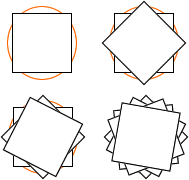
With
damp cloth or paper toweling, gently press phyllo
into pan. Carefully remove towel making sure towel
does not adhere to the phyllo and tear. Fill pie
as directed, then to crisp or lightly brown the
crust, bake the pie 10 minutes on a heavy-duty
baking sheet, preheated with the oven to 425°
F. Finish baking the pie, still on the baking
sheet, at 350° F. or as recipe directs. (Cover
edges with foil if they begin to overly brown.
For cream pies, just bake crusts until golden
brown and crisp, then fill.
COOKS
NOTE: Traditionally phyllo comes in 14 by 18 sheets.
To keep from wasting phyllo dough, I usually cut
the phyllo into 14 x 14 inch square sheets for
the 9 inch pie shells and cut the remaining into
4 inch squares press in muffin tins for tart shells
or mini quiches. Place several layers of the phyllo
in the tins and spray lightly with oil between
layers. Press carefully so that the dough fits
snugly in the cups. Mist lightly with oil and
bake at 400 degrees for 5 - 10 minutes or until
light golden color for baked shells. Fill as desired.
Week
of October 3, 2004
Steaming
Vegetables
You don't have to use just plain water to steam
vegetables. You may add some lemon juice, wine,
soy sauce, or other liquids to the water to add
flavor to the vegetables or add a fresh sprig
of thyme, rosemary, or other herb to the liquid.
A slice of onion or garlic also adds a soft aroma
and flavor to the dish.
You
may use an electric steamer, a metal steamer pot,
bamboo steamers or a metal steamer insert. Make
sure to use one with a handle that can be attached
at the top of the colander for easy removal. Remember
that the water should almost reaches the very
bottom of the colander but does not actually touch
the vegetables. It should be close enough for
the steam to cook the vegetables. Food is at least
one inch above the water at a rolling boil. The
liquid never should boil dry and the steam must
be able to circulate freely. It is useful to have
a kettle of boiling water handy when steam something
for a long period, to replenish the water as needed.
Almost
any vegetable or vegetable mixture can be steamed.
Steaming times will depend on the type of vegetable
and the size of the vegetable. When you are steaming
mixtures of vegetables, make sure to cut the vegetables
into smaller pieces if it requires longer cooking
times you may place vegetables like potatoes,
carrots, and other firm vegetables to the mixture
first so they can cook a little before adding
tender vegetables like green beans that take less
time. Add greens like spinach last as they take
just a short time to cook.
There
are several easy ways to tell when a vegetable
is cooked. If it is a green vegetable, look for
a vibrant color change. When the color intensifies
the vegetable is done. It should still be quite
crispy, but is tender. This should take at the
most about three minutes. In the case of leafy
greens like spinach it can take only a minute.
For non leafy green vegetables like broccoli and
green beans, it can take as long as 8 to 10 minutes
depending on the size of the vegetables and how
tender you like the vegetables. Obviously the
way that you prepare and cut the vegetables greatly
effects their cooking times. A whole carrot may
take over 30 minutes to steam, while thinly sliced
carrots can take only a few minutes.
DANGER:
Steam can cause severe burns. Be careful to always
open a steaming pan away from you to let the steam
escape away from you.